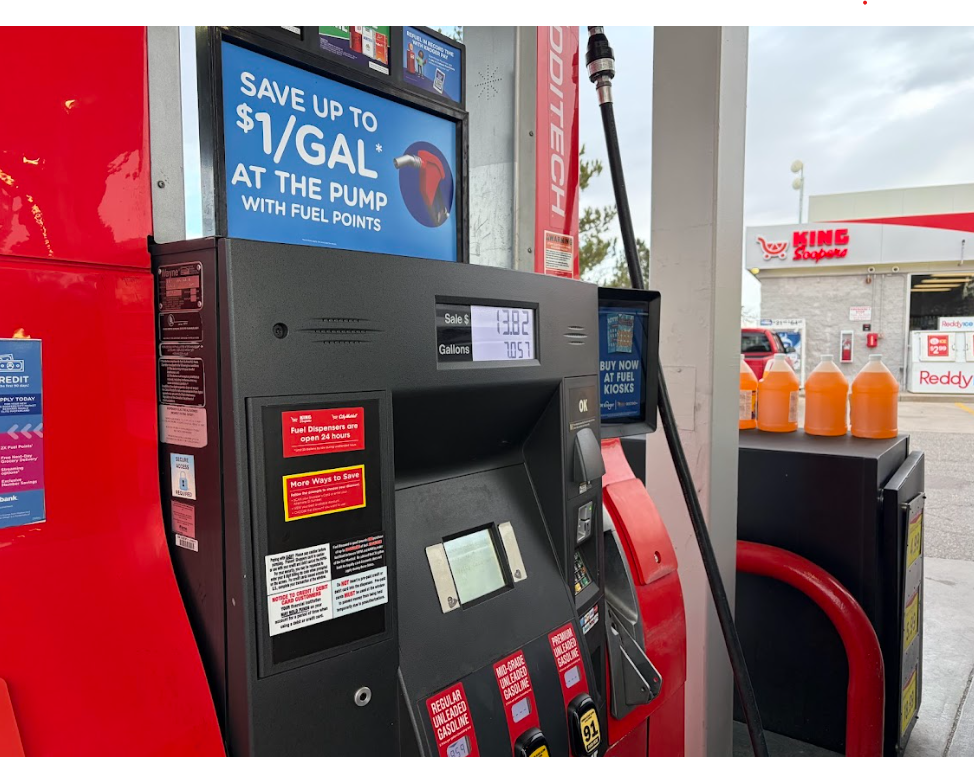
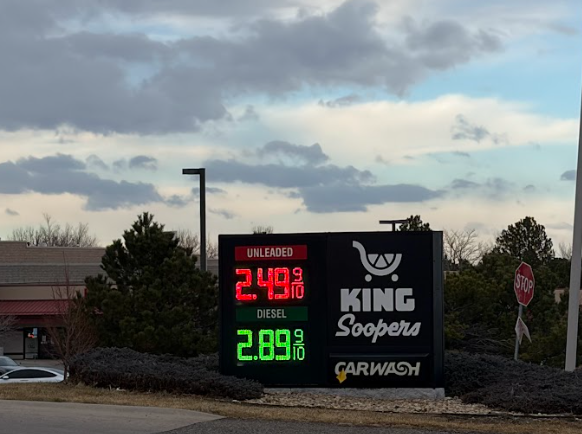
The red and green lights on the LED electronic pricer gleams. For the first time in years, gas prices in the Aurora, Colorado area have dropped to less than $3.00 a gallon. And for many students, the lower gas prices have quietly been changing the way they live, drive, and spend.
“[How much I spend on gas] changes a lot. I’m always looking to minimize what I’m spending on gas. I noticed it was under two dollars a couple weeks ago, so I wasn’t spending as much,” Dami Sotunde (12) said.
Trips to the gas stations have become less frequent and more rewarding.
“I go to [to the gas station] less often because I’m getting a full tank every time instead of half a tank,” Sotunde said. “I think the lower gas prices have caused me to drive more because I know I can always just go back and get more gas,” Sotunde said.
The extra money that students don’t spend on gas is used on other pursuits.
“When gas was high I wouldn’t want to burn gas. Now me and my friends just go drive places for fun,” Noah Musielk (10) said. “I was spending like 20 extra bucks on gas. Now I [have] a little more money to get food with [or] put into savings accounts.”
However, gas prices continue to fluctuate due to multiple influences.
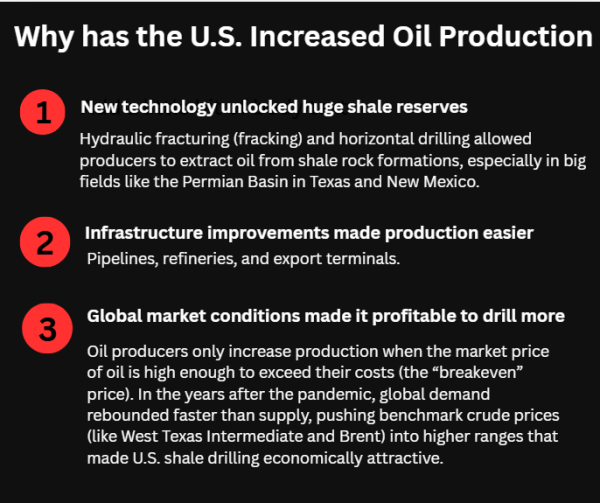
Gas prices have been relatively low mainly due to an excess in supply in crude oil, the biggest part of what is paid at the pump. In 2025 and into early 2026, global oil supply grew faster than demand: OPEC+ (a group including Saudi Arabia, Russia) reversed earlier production cuts and added more barrels back into the market to protect their market share. Simultaneously, non-OPEC producers like the U.S., Brazil, and Canada also increased output.
This extra supply wasn’t fully absorbed because demand grew slowly as many economies soften and vehicles become more fuel efficient, so inventories built up and prices dropped. When crude oil prices fall, gasoline prices usually follow, which is why the U.S. national average has often stayed below about $3 per gallon, its lowest in years.
In the U.S. specifically, high domestic oil production adds to this global surplus, and Americans are demanding less gasoline than expected, keeping pump prices down. This doesn’t mean taxes or refining costs have disappeared, but the main driver of the recent drop at the pump is too much supply relative to demand on the world market.


![The Stone Age Starts with the Schools [OPINION]](https://ghschronicle.com/wp-content/uploads/2026/04/iranphoto-1-900x1200.jpg)