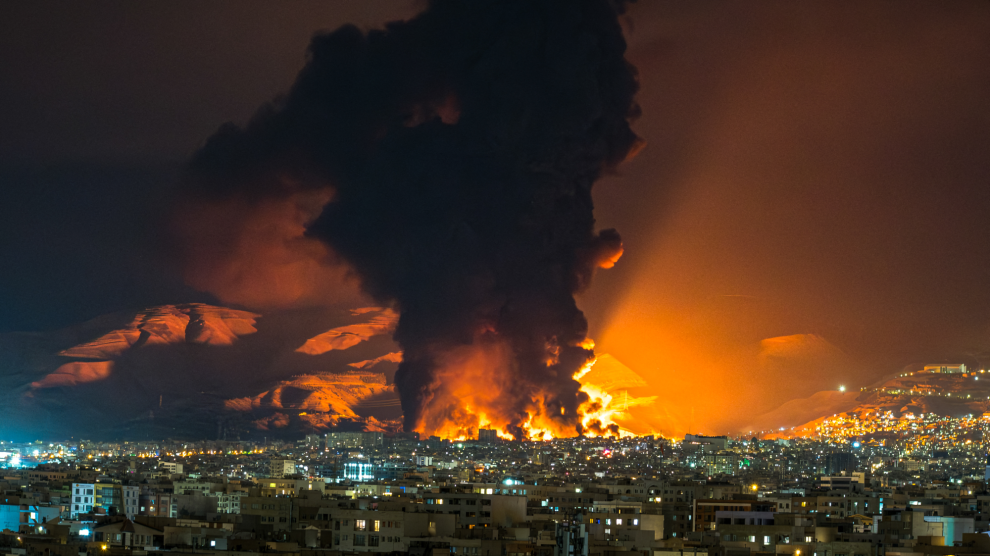
On February 28th, the United States and Israel conducted joint military strikings in the Islamic Republic of Iran. The United States and Israel cite the reason for their declaration of war to be eradicating Iran’s nuclear program. Since then, Iran has retaliated with strikes of its own across US military bases in the Middle East and the capital of Israel, Tel Aviv. The bad relations between the countries have been evident in the last two-years, with conflict breaking out in April of 2024 and again in June of last year, and tension within the area (Israel and Iran especially) is only building.
“Our objective is to defend the American people by eliminating imminent threats from the Iranian regime,” President Donald Trump said.
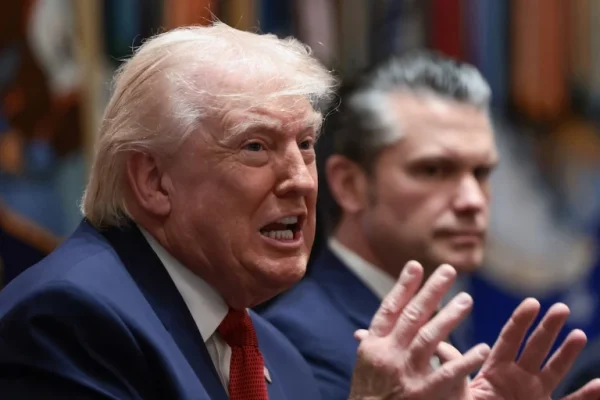
Yet, the majority of American people don’t feel prioritized in pursuit of this war. In fact, about 6 in 10 Americans oppose the war. With over 4,000 dead (Including many Middle Eastern countries who are partially involved), backlash within our country continues. According to AP-NORC, some Americans have gone to call the US attacks too far. This feeling is echoed in the halls of Grandview.
“It’s quite literally treason,” Khaled Ajour(12) said. “And we should be out of Iran as soon as possible.”
There have been no official rulings of treason committed by the US. But, Ajour’s strong claim can point to the effect of a war, thousands of miles away.
“This stuff has been happening since before we were born, we [United States] just want to show our dominance,” Baylor Kibble (11) said. “I don’t like wars, it’s just unfortunate.”
It is unclear if the US is the dominant figure in this war – Trump has claimed victory. But Iran’s bombing of US bases in the Middle East and Israel, and the closure of the Strait of Hormuz, show the opposite. Nonetheless, destruction and death are being followed by all sides.
“This war is going to cost a bunch of innocent lives, but I feel like the benefits that could come from this outweigh those negative factors,” Bayan Movaffagh (10) said.
Movaffagh, an Iranian American student at Grandview, expresses an opinion contrast to the general public, which could lead to potential tension at Grandview.
“[To me] it doesn’t matter who you support,” Kibble said. “I’m an American, [and] I don’t have the same opinion as others on the war.”
Regardless if division is building within the school, outside influence still has its effects. Trump has been quoted to say, in regards to Iran, that the US is fighting “A vicious group of very hard, terrible people.” Hostility from a voice as prominent as Trump’s, towards an entire country, is detrimental towards Iranian-Americans assimilation.
“It makes it hard for Iranians to be able to [fit in] and be characterized as non-terroist, especially in the U.S. now,” Ajour said. “There could be some adversity there.”
Adversity while trying to fit in leads to hardships such as hatred, discrimination, violence in society. In March of 2026, a man in Lombard, IL was charged with a hate crime for spitting and physically attacking a man, while spewing anti-Iran obscenities.
“It’s sad and unfortunate,” Movaffagh said. “He [Trump] could have differentiated the Iranian people from the government… majority of us don’t believe the government represents us.”
It is important that the differences at Grandview don’t escalate to the magnitude of Lombard. With Iranian, Israeli, and American students all representing Grandview, unity is crucial so all students feel comfortable in their place of learning.
“We live in the United States, we have free will and we have our own opinions,” Kibble said. “We shouldn’t argue about it and I don’t hear many people doing that [at Grandview].”
Furthermore, the US-Iran war can impact students mentally through their personal connections to it. Death and destruction has trended across the region, with over 15 countries involved. Grandview’s diverse student body could feel the pain and loss through their global ties.
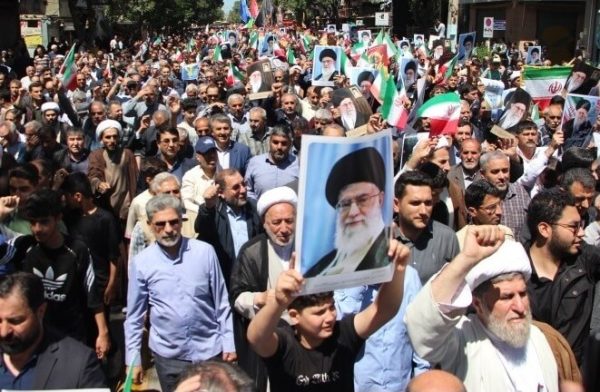
“It’s emotional, but it brings hope,” Movaffagh said. “There’s hope that one day Iran can be completely free and citizens living there can benefit.”
Emotions vary in times of war, from hope and fear to even anger. As 6 in 10 Americans disapprove of the war, frustration builds as the war continues on.
“I love America,” Ajour said. “But [the war] drags our name into the mud and makes us seem like terrible people. Not to mention gas prices.”
With Iran’s control over the Strait of Hormuz, a critical oil transportation passage, gas prices continue to trend upwards. But the goals of this war impact more than oil exports. As the US and Israel’s goal remains to destroy Iran’s nuclear program, Iran International says that over 70% of the local population want a change in government.
“The government over there is extremely corrupt,” Movaffagh said. “I mean they have killed several thousand people in a short amount of time.”
In early January 2026, Iranian security forces carried out massacres that resulted in the deaths of thousands of protesters. Additionally, the country’s total death toll in the ongoing war has surpassed 2,000, the majority of whom are civilians. As a result, many Iranian citizens feel deeply conflicted about where they stand in the conflict. The population is divided over whether to support their own country – potentially aligning with a government they have long protested – or to side with foreign powers that claim to seek regime change. What remains clear is that the Iranian people’s pursuit of political reform is caught in the crossfire of competing interests.
“I want to see the government choose to leave instead of forcefully being taken over,” Movaffagh said. “It would definitely result in less innocent lives being taken.”
Regardless of opinions, beliefs, origins, and the overall effects of this war, Grandview’s staff and students should work together to maintain peace and cohesion throughout the school.


![The Stone Age Starts with the Schools [OPINION]](https://ghschronicle.com/wp-content/uploads/2026/04/iranphoto-1-900x1200.jpg)