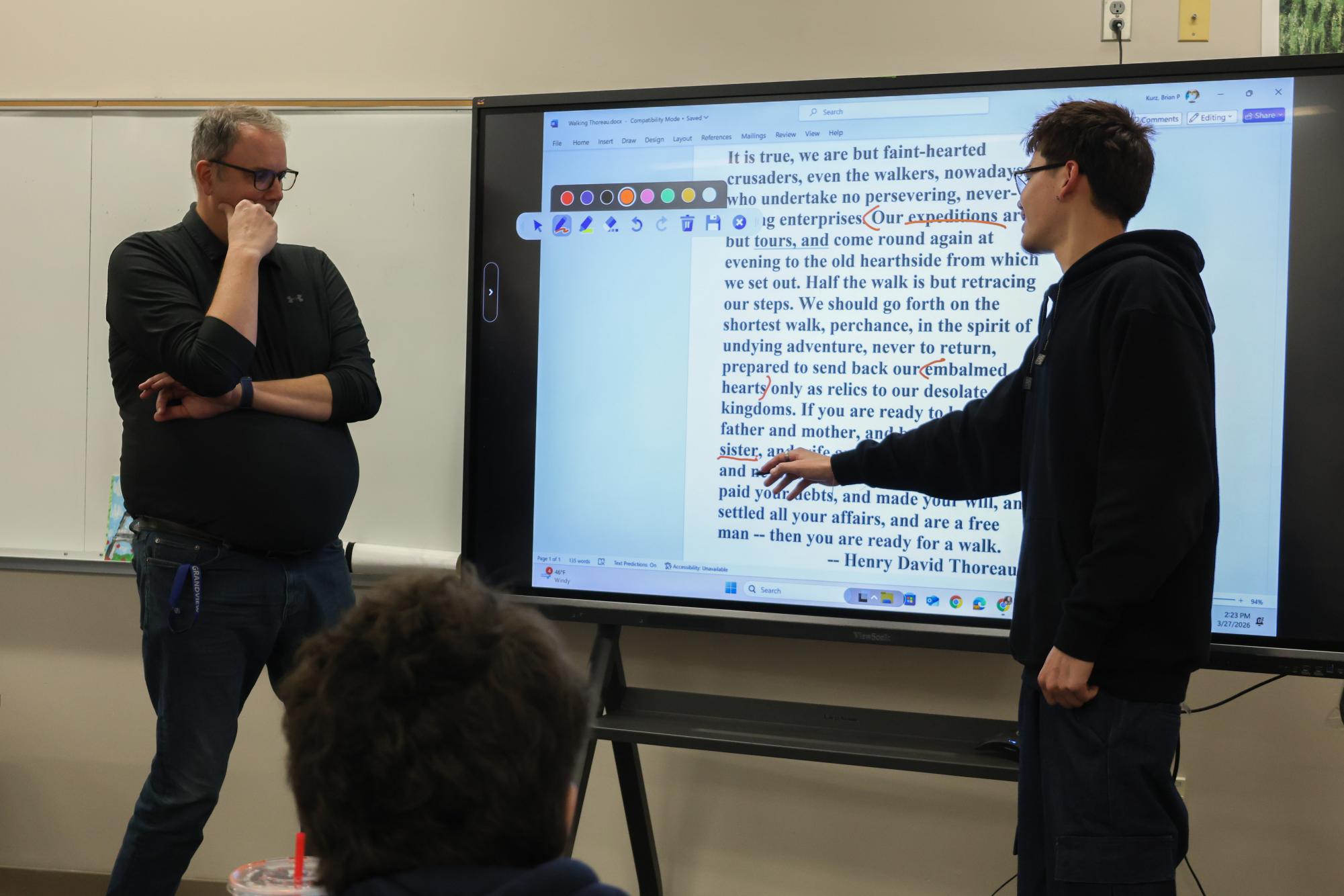
The age of the projector has come to an end.
Students and faculty alike came to this realization as they returned from spring break this week. The classic projectors and pull-down screens have been replaced with shining, brand new Interactive Flat Panels (IFPs), colloquially referred to as “the TVs”.
“I’m still very much learning how they work,” Lisa Rodgers (Science) said. “I think that there’s a lot more opportunities for things that we can do with this system, but I don’t really know what they are yet.”
Within their first week of implementation, the IFPs have drawn mixed reactions around the building. Teachers ran into numerous roadblocks as they learned to work with the unfamiliar technology during lessons, especially on the first day back, March 23rd. Some were locked out, some had issues with pulling up presentations, others had problems using the stylus.
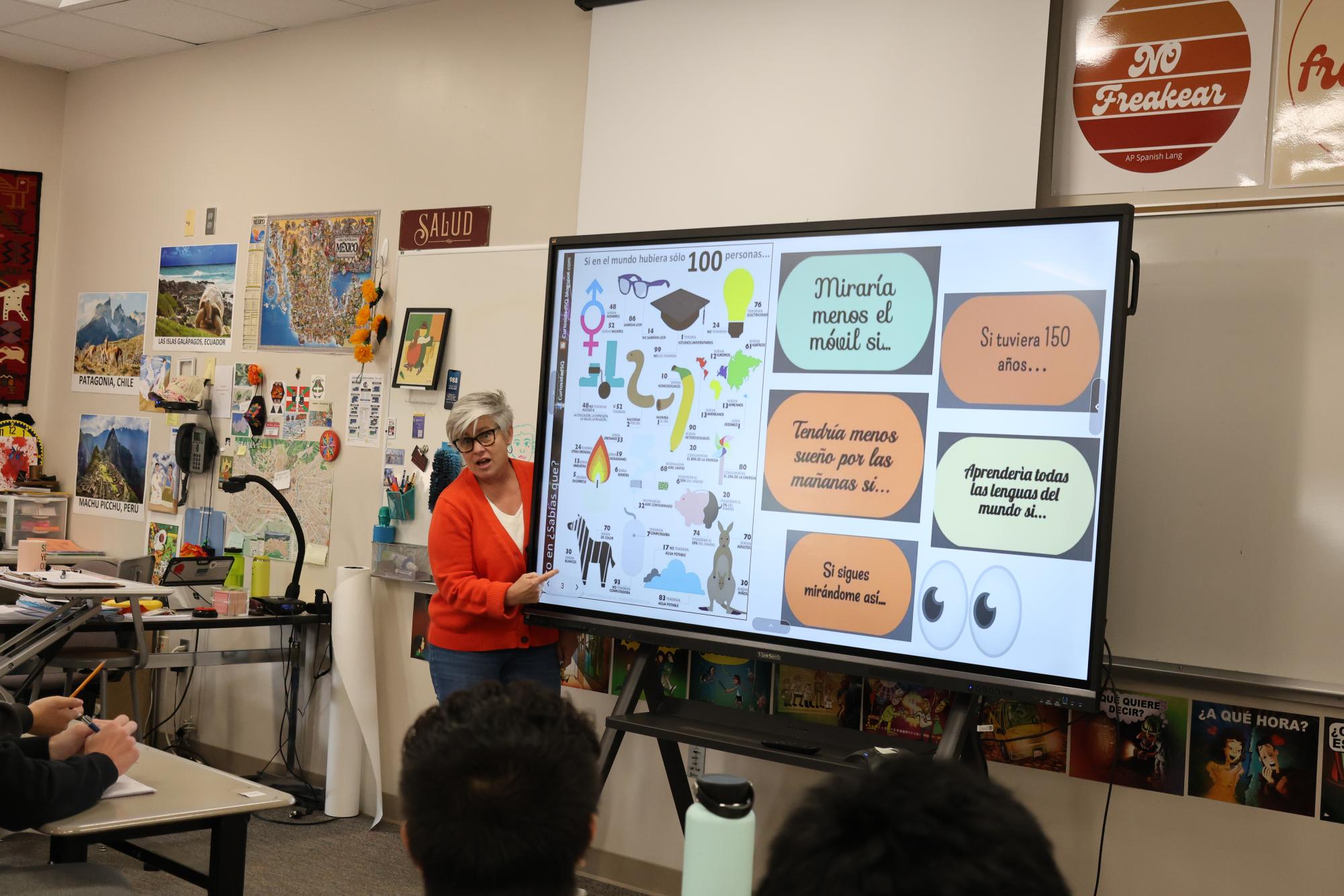
For the math department specifically, their software (such as SMART notebooks) had trouble communicating with the IFPs, which replaced the department’s previous SMARTboards. While previously they had the same company for both their hardware and software, the new tech is run by ViewSonic, which is less compatible with SMART software.
“My goal this week for my department was just basic functionality,” Kim Robbins (Math Department Head) said. “Can people be displaying? Can they use their doc cameras and their computers to display, and maybe write in some form?”
As faculty scrambled to adapt to the new technology within the pressures of 4th quarter, technology coordinators like Ryan Whitenack played a crucial role in easing the transition back from spring break.
“[I’ve just been] running around trying to help people connect to the televisions, get them working the way they want it,” Whitenack said. “There’s, I think, 200 teachers in the building, and all of them have their own little variations on how they like to do things.
Because of the timing of the technology replacement, it was difficult for the district or the tech coordinators to hold any official or mandatory training for the teachers. Tech coordinators did organize for an IFP to be available in the library before they were implemented, but only “10% or maybe 20%” of teachers were able to use it to practice before spring break (Whitenack).
“For me, I would have preferred that they installed them but left our old technology here, so that I’m not learning how to use it while I’m standing in front of 30 humans,” Rodgers said. “This thing and I are not communicating very well right now. In fairness, I could have stayed up there [in the library] and messed with it more, and I did not.”
“I think it would have been helpful to have a professional development day dedicated to learning about the TVs,” Liz Groves (English) said. “I would like ideas for how to have students interact with [the IFPs] so that I can implement those into my own teaching practices.”
Whitenack has organized for a ViewSonic employee to come in and give additional training and advice to teachers during their off-periods this upcoming Thursday. While not mandatory, taking advantage of this opportunity is “highly encouraged” for teachers.
“If it’s clear that more time is wanted or needed, ViewSonic will come back and do some more training,” Whitenack said.
Even through the adaptability and training issues, some teachers remain hopeful for future benefits of the IFPs. The interactive capabilities of the technology hold a lot of potential for unique lesson plans and lecture styles. For the math department, the district-funded IFPs saved them the money that would have been used to replace the aging SMARTboards.
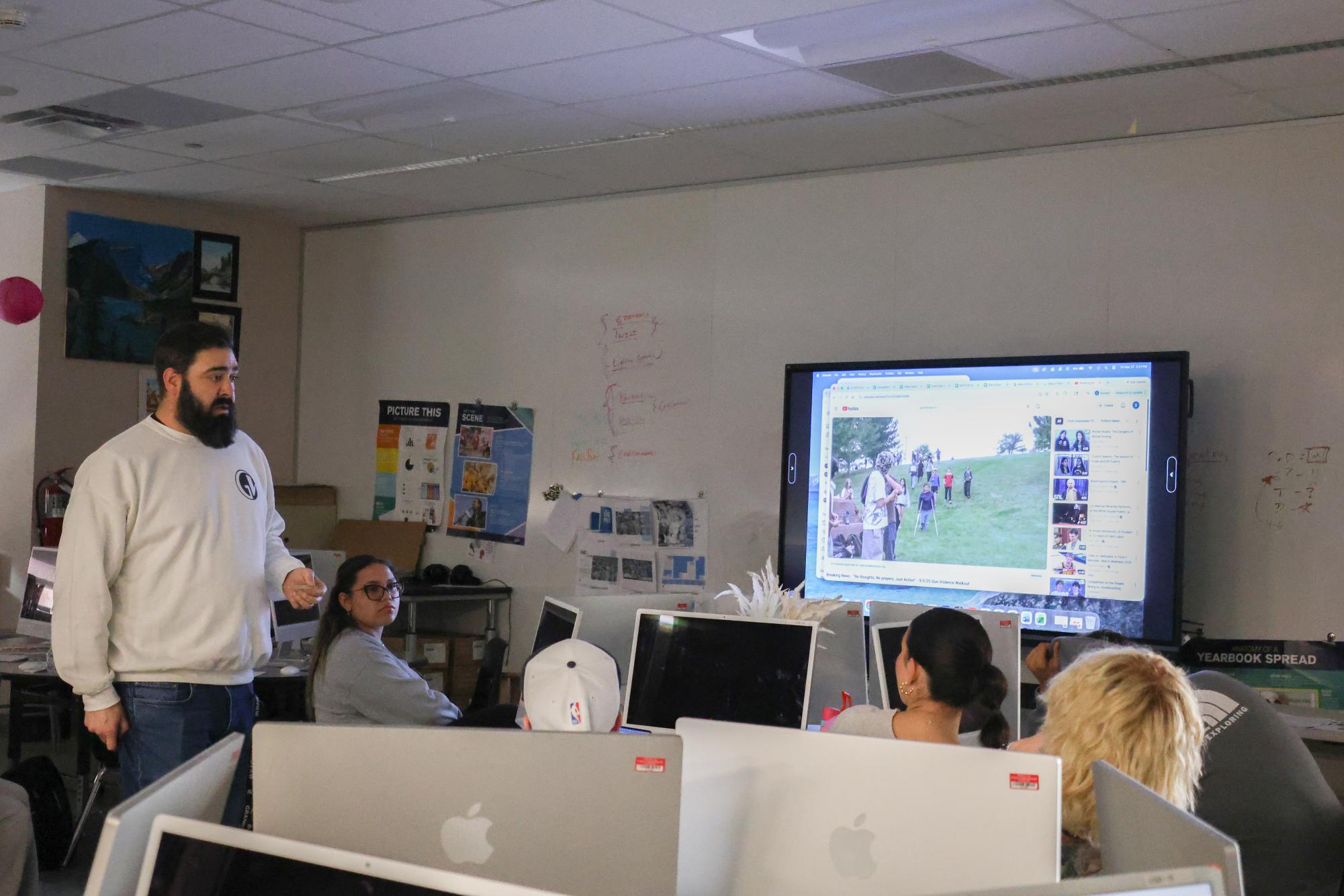
“There are some functionality problems because of our software, particularly for math, but I think once we work those out, we’ll actually be in a better place from now on,” Robbins said.
For departments like English, social studies, science, and others, the ability to draw on the screen as a direct demonstration for students stands out as a potentially game-changing feature.
“It’s nice to write directly on the slides, and that you can take screenshots of everything that you do, and it’ll save it to your Google Drive,” Groves said. “It makes it really easy to open up a slideshow, and then go over a worksheet. It charges your computer, and it’s compatible with Google, which are all really nice features.”
Of course, this sentiment varies from teacher to teacher, and from student to student. A number of students expressed negative objections to the IFPs – in several cases, more strongly than their teachers did.
“The new TVs are really, really bright,” Meghna Harikrishna (11) said. “I really don’t like that.”
“They serve the same purpose as the projectors or smart screens, but aren’t mounted to the wall anymore, so they take up more classroom space when the rooms are already cramped,” Emila Gilmartin (11) said. “Being on the floor and slightly smaller also makes it harder for students to see from the back of the room. Overall I don’t see the purpose of the change.”
One of the most common grievances students have with the IFPs is that they believe the district money would be better spent elsewhere in the building, and that the new tech was unnecessary.
“I think we could have used [the money] better in other ways,” Audrey Kalala (11) said. “Maybe for these stupid desks that we have. Or even the bathrooms.”
However, the primary reason for the implementation of the IFPs was a major $950M bond approved by residents of Cherry Creek Schools in 2024, the basis for district-wide improvements like security window films and cameras, new bleachers and roofs, a sound system replacement, and expansions to the CCIC campus. Along with this bond came the estimated $18M for all classrooms to “receive new large touchscreen flat-panel screens, replacing outdated technology” (Cherry Creek).
As the school adjusts to this change, it can be expected to experience more of the struggles that accompany any learning curve. Whether the IFPs will ultimately shift educational practices remains to be seen, the district’s investment set the precedent for a more interactive and technologically involved style of education.
“I’m trying to welcome the change rather than be resistant to it,” Christopher Pegg (English) said.


![The Stone Age Starts with the Schools [OPINION]](https://ghschronicle.com/wp-content/uploads/2026/04/iranphoto-1-900x1200.jpg)