



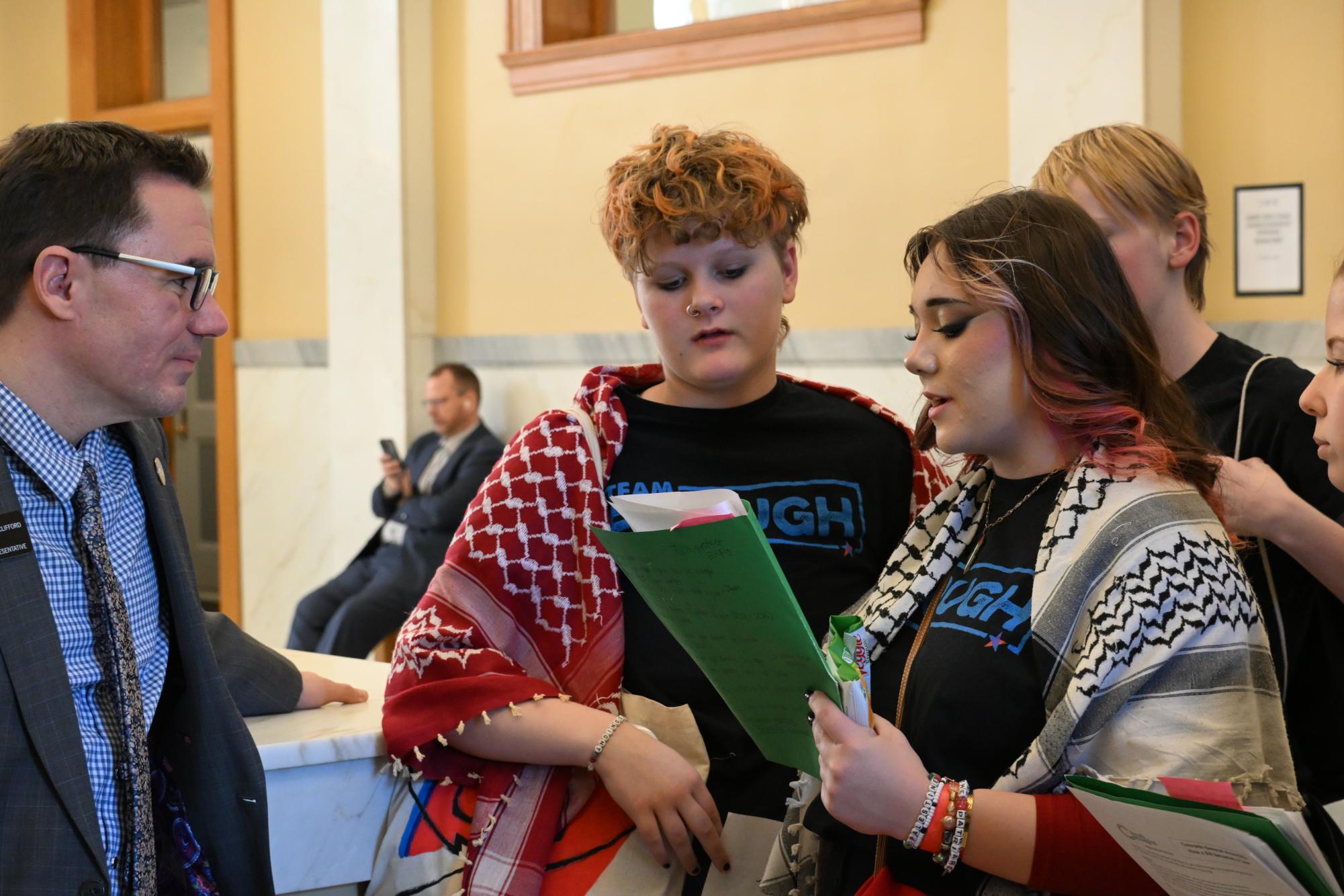
From the lawn outside the school to the golden rotunda of Colorado’s State Capitol, the passion and drive of the student activists of Team Enough seems to know no bounds. On February 26th, the group traveled downtown to campaign to legislators on gun violence-related bills, taking their activism up another step.
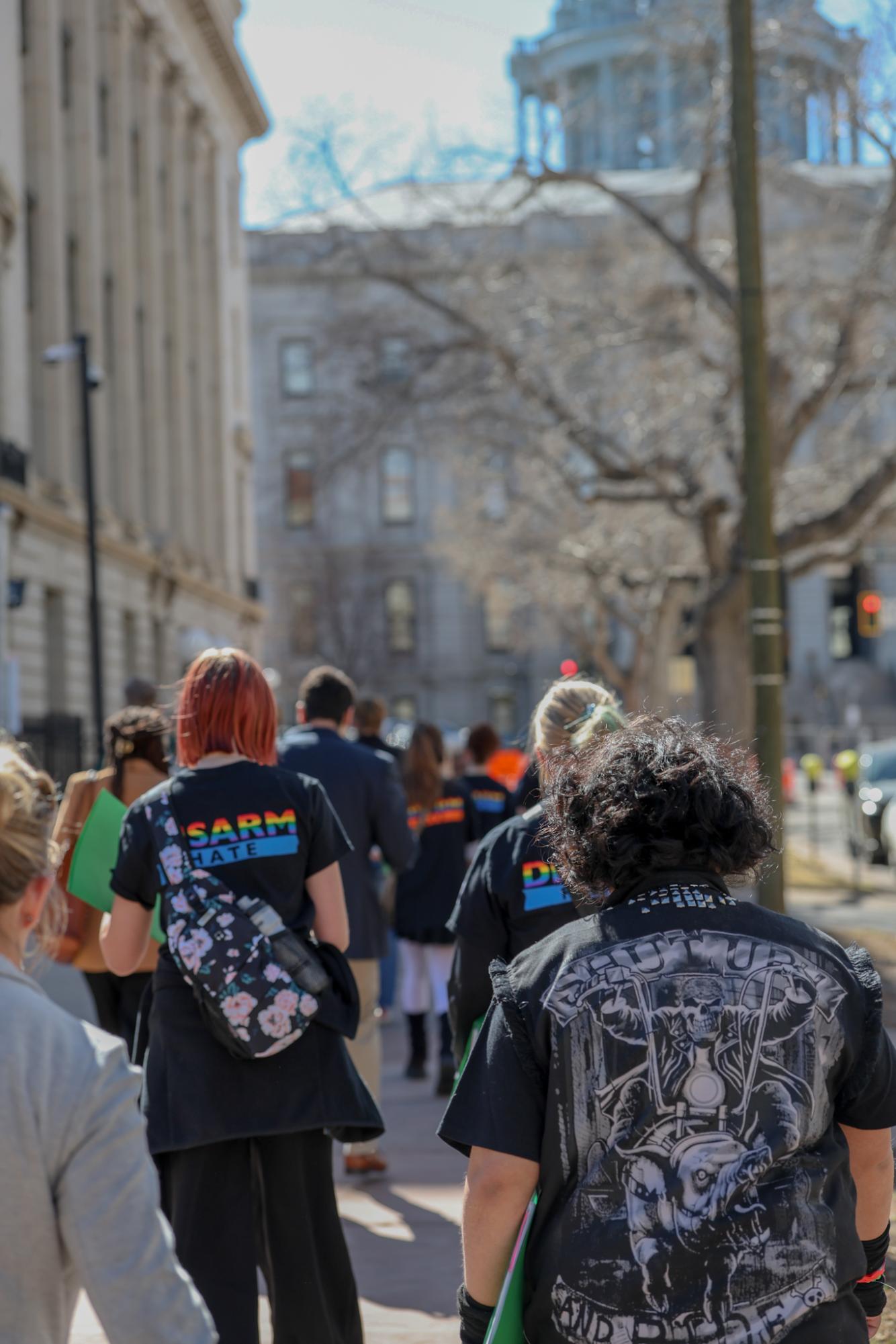
“Obviously, we have the energy to protest. This group sponsored that amazing walkout back in September, right?” Jennifer Kirkpatrick, teacher and Team Enough sponsor, said. “But then how do we continue the energy from there?”
On February 26th, a variety of activist groups and organizations came together to lobby for and against proposed gun violence bills at the Capitol. From sharing personal anecdotes to discussing the bills in more detail, lobbyists are an extremely influential group when it comes to passing legislation. Anybody can lobby, but student voices like the ones of Team Enough tend to be particularly noteworthy.
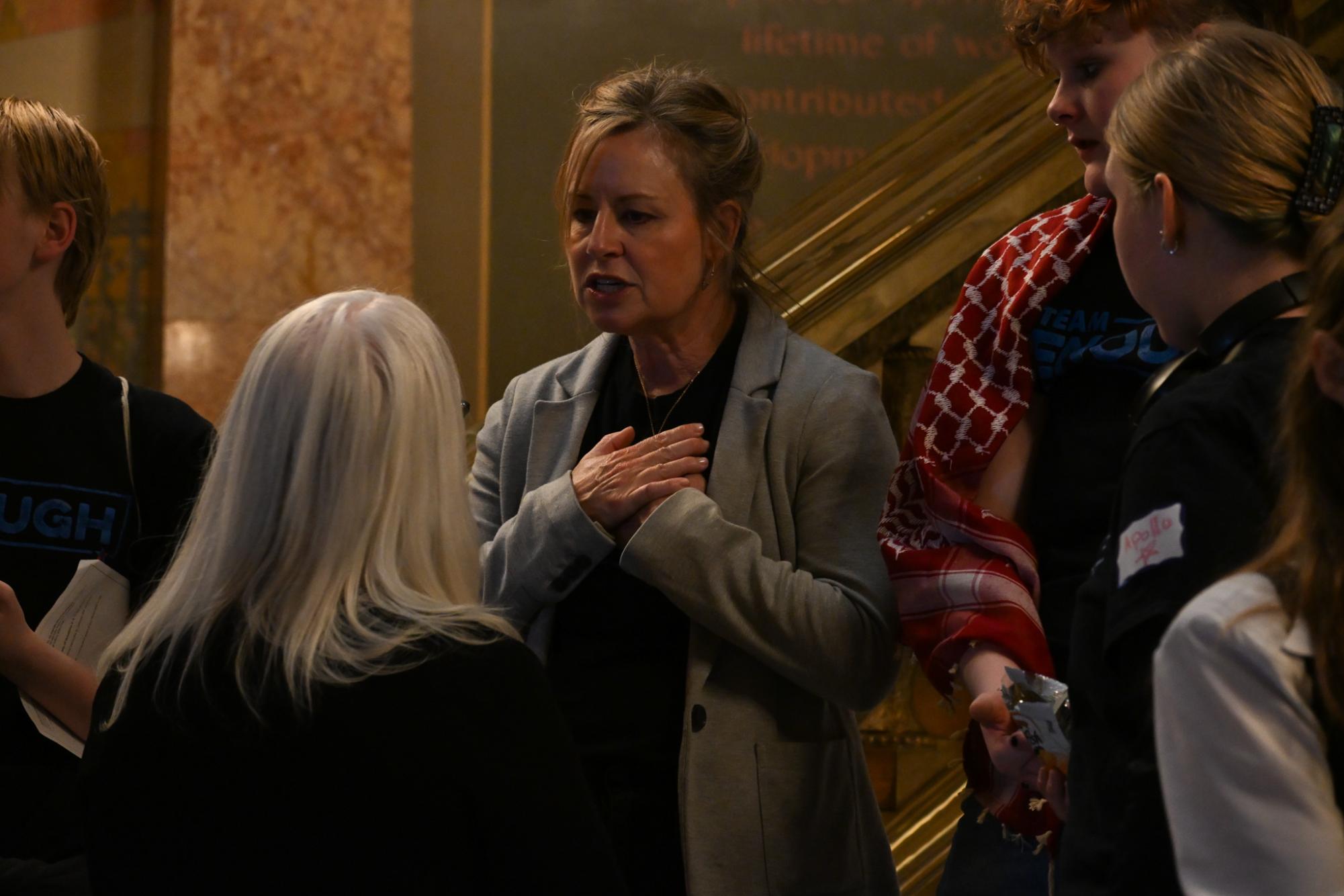
“They don’t remember the statistics as much, or the various factoids,” Eliza Hamrick, Colorado State Representative, said. “They remember that student telling about being under their desk when there was shooting going on, or losing a friend.”
For the students lobbying at the Capitol that day, there was no shortage of stories and anecdotes.
“One of the earliest things I can remember is bullets coming through my window, and being made to get on the ground,” Garcia-Liddell said.
Garcia-Liddell was 4 years old when a drive-by shooting occurred on his street. While others shared stories of friends who were impacted by gun-violence.
“Unfortunately, in this generation, every [individual] has a personal experience,” Kirkpatrick said.
At the Capitol, students learned that they have the capability to make change and prevent experiences like theirs in the future. The physical presence of community members and lobbyists in the Capitol discussing real-life issues with legislators is a powerful way to leave an impact.
“[It shows them] that we’re real people. We’re not just statistics, and they do have an impact on what we do,” Sam Parker (10) said.
By showing up and showing out on occasions like these, teenagers can demonstrate to others that they do have a voice and can have an impact on their representatives and their community as a whole.
“There’s so many kids and adults that are just sort of apathetic for whatever reason. They just don’t think their voice matters, and they just sort of cocoon themselves in,” Hamrick said. “These students that come here have hope and are focused on making society a better place. And so it reinvigorates me. It refreshes me, it renews me, it inspires me.”
These interactions with representatives allow for a deeper connection to law. Through an organization called Colorado Ceasefire, young people and other community members alike were instructed about how bills become law, the importance of specific gun-violence prevention bills, and how to effectively lobby.
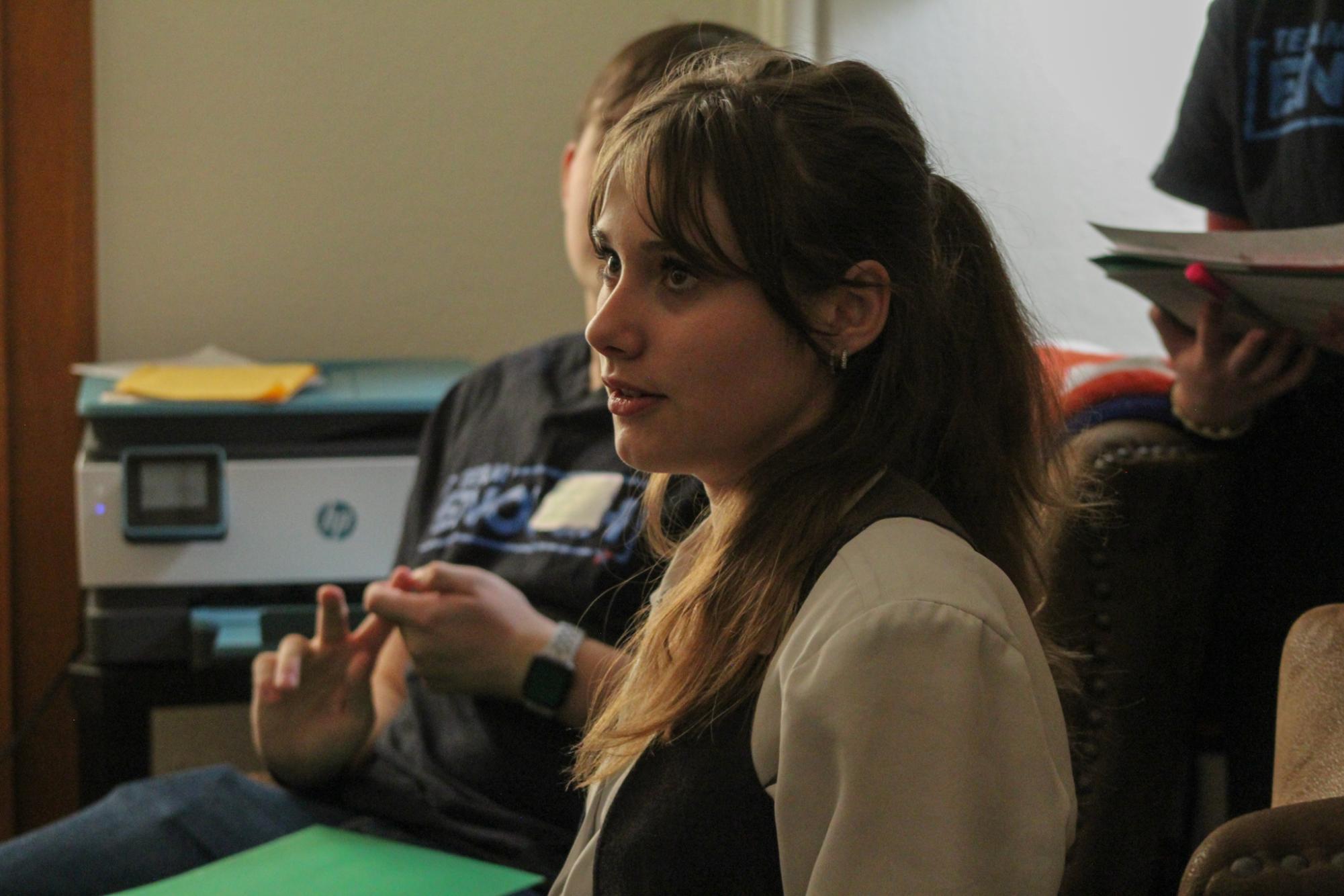
“I have learned that it’s really important to come prepared, knowing a lot about the people you’re gonna be talking to, knowing about their standpoints, knowing about previous bills that they might have supported or not supported,” Clarissa Crapo (10) said.
Two of the main bills (HB26-1144, HB26-10) currently in-session that lobbyists focused on were surrounding the issue of “ghost guns” which are often homemade weapons without serial numbers, making them impossible for authorities to track. Recently, the widespread availability of 3D printers and online templates has enabled the creation of 3D-printed guns, where individuals can 3D print most parts of a gun and then order the barrel (which is difficult to 3D print) online, without any restrictions or checks.
“I think that it’s a loophole that we need to close as soon as possible,” Garcia-Liddell said. “The templates online are like $5, and it’s so dangerous to have that readily available.”
Aside from this, students also lobbied for bills that would tighten regulations on gun stores and implement a safety procedure for victims of domestic violence (HB26-1126, SB26-043, HB26-1009, SB26-011).
“I really hope that legislators get the message that students and children are advocating, and that we are fighting for our voices to be heard,” Crapo said. “A lot of the time I feel like lawmakers don’t realize how much students and young people care about these issues.”
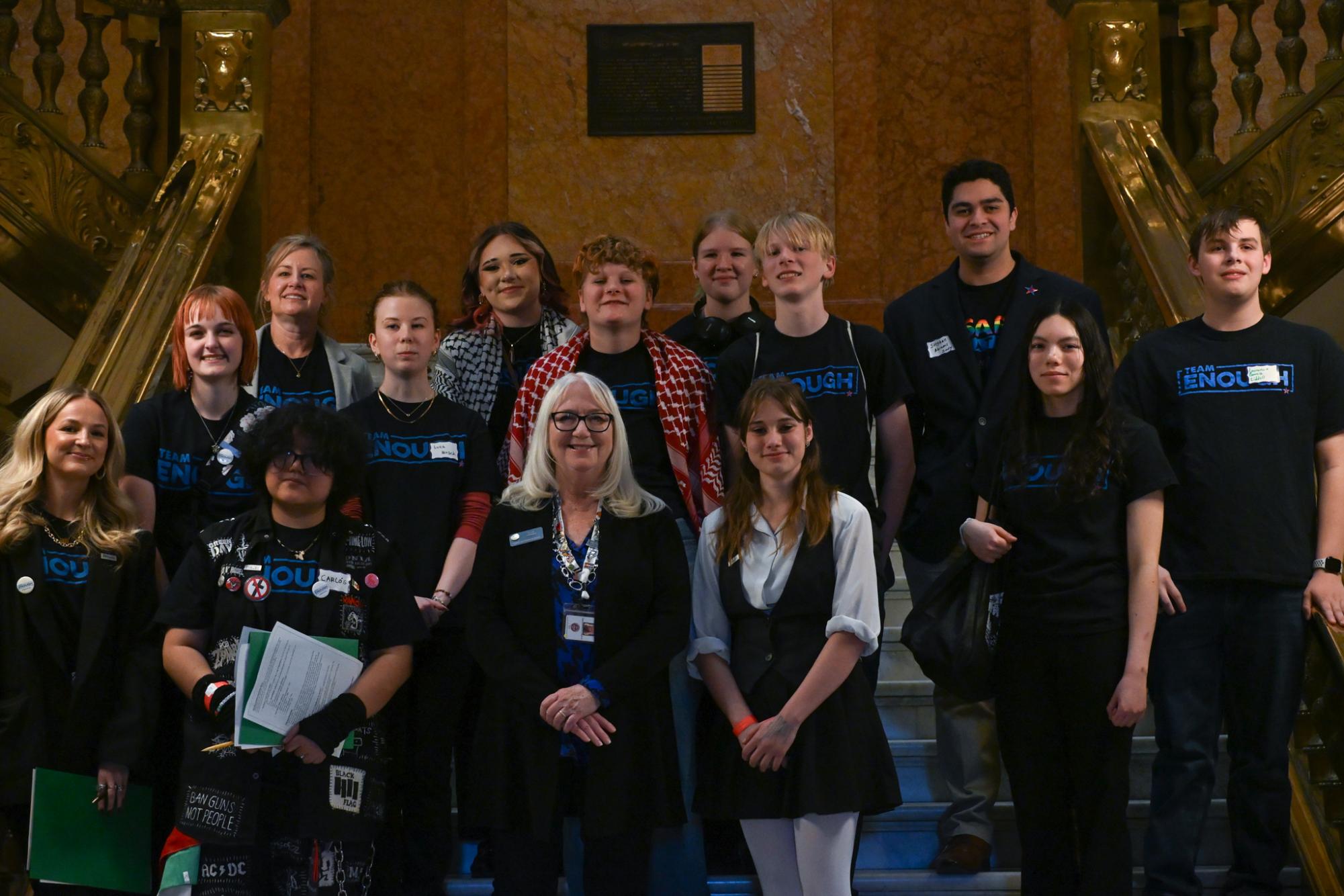
No matter the bill they were lobbying for, students came together for a cause they believed in. By giving their narratives to lawmakers in hopes of making change, they showed their peers what it looks like to take an active role in the political landscape around them.
“Legislators are incredibly accessible. [Student] voices matter, showing up matters, testifying matters, that they can move the needle,” said Hamrick.


![The Stone Age Starts with the Schools [OPINION]](https://ghschronicle.com/wp-content/uploads/2026/04/iranphoto-1-900x1200.jpg)


![Unified Theatre Stars in Their Production of Shrek [Photo Gallery]](https://ghschronicle.com/wp-content/uploads/2026/04/shrekfischer_7933-1200x800.jpg)