


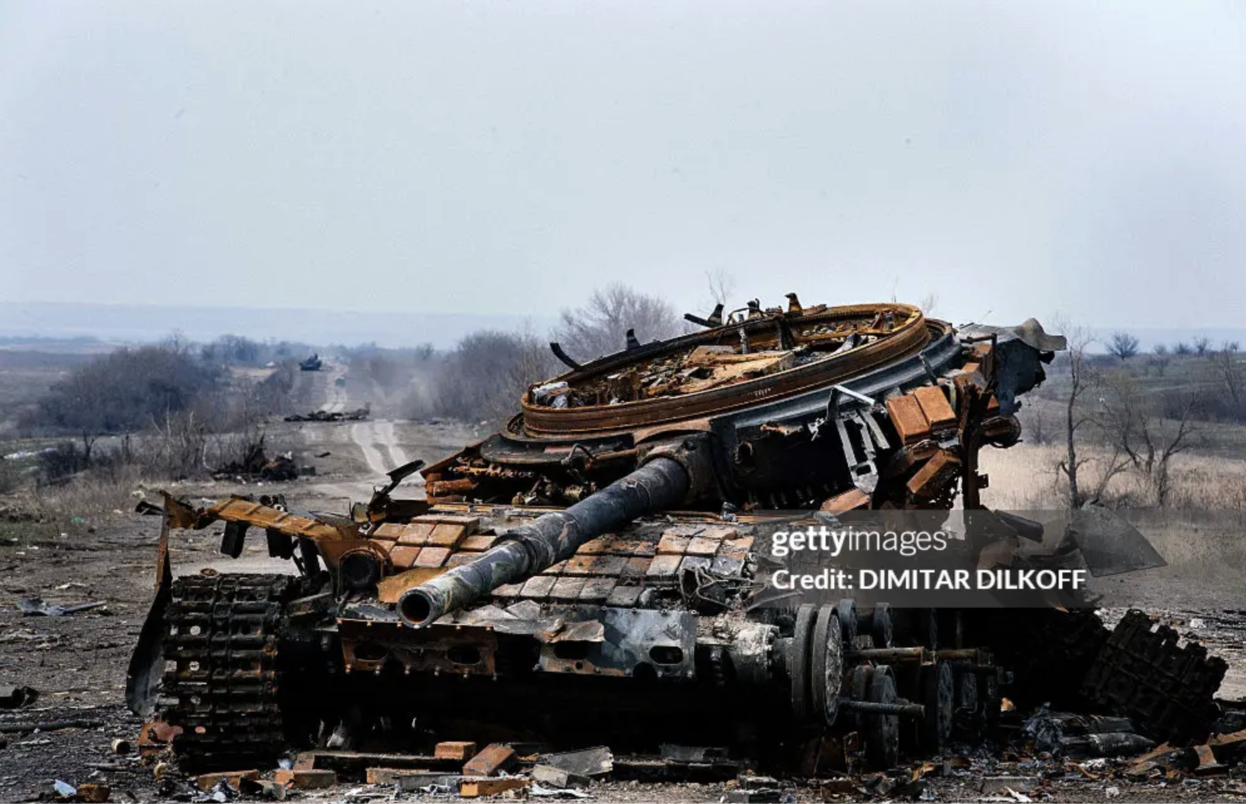
1,151 days have passed since February 24, 2022 – the day the Russian Federation launched a full-scale invasion of Ukraine. The conflict has destabilized the region, displaced millions, and resulted in the deaths of hundreds of thousands, making it one of the deadliest wars on European soil since World War II.
“I feel a lot of empathy for teens involved in the war. My heart truly goes out for the teens having to process the war and feel the effects at such a young age,” Elliana Bloshenko (10th) said.
The impact on younger people is also shaped by how the war is presented online, particularly through social media. Many teens rely on these platforms for information, despite concerns about accuracy.
“I believe social media affects how teens view war because it spreads a lot of misinformation about conflicts, which then brings more attention to one side or the other. I feel like social media is an unreliable source for information about wars because not everything is 100 percent accurate,” Abby Gurzhiev (9th) said.
Beyond misinformation, others focus on the lasting geopolitical and human consequences of the conflict, and psychological trauma of teens and other people living in or near the front line, even with these factors life continues for the citizens who are still left in Ukraine.
“It made me see that world peace as an idea for both of these nations coexisting seems nearly impossible with how many casualties there are on both sides,” Anonymous said.
The high number of casualties can also be linked to the evolution of modern warfare. With the introduction of small, hand-held FPV drones, the battlefield has become more dangerous and unpredictable, affecting both soldiers and civilians caught in the crossfire. Steps are being taken to adapt to these weapons of mass destruction such as DEW (Direct Energy Weapons) or electronic jammers.
“With the factor of drone combat and playing games similar to that, yes it could turn the tides, but since drones are so destructive, it could be a good and bad change toward warfare,” Anonymous said.
As warfare becomes more advanced and destructive, it also raises questions about how other nations should respond. In particular, some teens are debating what role the United States should play in the conflict. While Donald Trump promised the war would be ended in 24 hours if he was elected multiple times throughout 2023 and 2024.
“In some ways I do think the U.S. should be involved, but I believe they should be involved in ways that would actually make a difference and bring peace to both sides, rather than siding with one. A lot of what the U.S. provides in wars is more violence, which can help in some ways, but I also believe it creates a bigger conflict than there already is,” Abby Gurzhiev (9th) said.
Beyond questions of foreign involvement, some teens are more concerned about how these conflicts could affect them personally.
“It affects our age group because of the chance of drafting. The government has constantly changed its laws on the drafting age and how they perceive it as right to send in young men. For adults, it’s different because they are more likely to be drafted,” Anonymous said.
While some teens worry about their own potential involvement, others focus on the broader human cost of war.
“I feel empathy for all people living in war zones, teenagers, the elderly, and children. No one should have to live in an area of active conflict,” Anonymous said.


![The Stone Age Starts with the Schools [OPINION]](https://ghschronicle.com/wp-content/uploads/2026/04/iranphoto-1-900x1200.jpg)




![Unified Theatre Stars in Their Production of Shrek [Photo Gallery]](https://ghschronicle.com/wp-content/uploads/2026/04/shrekfischer_7933-1200x800.jpg)
trisha • Apr 29, 2026 at 1:17 pm
Very well written and you can feel the author’s empathy for the victims.