


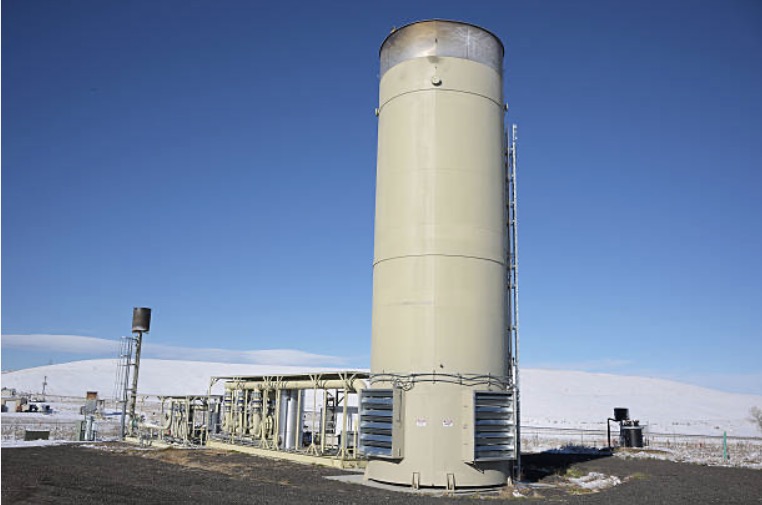
Effective in early February, the Trump administration initiated severe federal funding cuts targeted towards Democrat-led states—focusing on health grants, child care, and energy projects. Their goal was to cut 600 million from health, 10 billion from child care, and over 7.5 billion from climate research. States have since responded with lawsuits, arguing that the cuts were politically motivated and unconstitutional.
“Federal funding can’t be terminated to punish states or score political points,” Rob Bonta (California Attorney General) said. “Agencies don’t have the authority to override laws passed by Congress simply because Trump dislikes them.”
The Department of Health and Human Services (H.H.S) stated that the “grants are being terminated because they do not reflect agency priorities.” These health cuts were aimed at four specific blue states—Colorado, California, Illinois, and Minnesota. These affect partner organizations as well, including 7.2 million from the American Medical Association in Illinois, which supports gender transitions for kids; 5.2 million from Lurie’s Children’s Hospital of Chicago for HIV prevention work among Black women; $876,000 from the University of California for a project focused on reducing social isolation among older LGBTQ adults; and $371,000 from the Colorado Health Network for outreach to engaging Latino and African American gay men.
“It is concerning that H.H.S. is cutting public health funding to local communities that cover core functions in the middle of a measles outbreak and other health threats,” Dr. Deb Houry (Former Chief Medical Officer of the Centres for Disease Control and Prevention) said. “This, coupled with large staffing cuts to federal public health, leaves communities less prepared.”
U.S. District Judge Manish S. Shah temporarily stopped the 600 million cut on February 12, halting the reduction for 14 days. Further hearings will be scheduled to determine whether a longer injunction for the restraining order is warranted beyond February 26th. If not, the funds would be rescinded immediately. However, Shah could file an emergency appeal with the Seventh Circuit Court of Appeals to keep the funding frozen past the two weeks.
“The harm to plaintiffs from the loss of funding is irreparable and intangible—the loss of capacity to fund and maintain public health infrastructure puts the health of plaintiffs’ residents in jeopardy,” Shah said.
Billions of dollars were depleted from child care services in Colorado, California, Illinois, Minnesota, and New York. 7 billion was cut from the federally funded, state-run Temporary Assistance to Needy Families (TANF) program. Although Congress endows TANF, it is designed and administered by individual states. Additionally, 2.4 billion from the Child Care and Development Fund and 870 million from social services grants for children were cut. The administration cited a freeze on this funding due to “massive amounts of fraud” allegedly committed through daycare payments. The states involved have pushed back and challenged the action’s legality.
“This is a fight we’re going to have to take on if we get that notification,” Kathy Hochul (New York Governor) said. “It’s vindictive. I believe that we’ll be successful in court. We’ll be having a litigation strategy. We’ll fight this with every fibre of our being because our kids should not be political pawns.”
Following the government shutdown, the Department of Energy (DOE) cancelled 7.5 billion in climate funding. Russell Vought (Director of the Office of Management and Budget) specifically focused on projects in 16 Democratic-leaning states when cutting the grant.
“The Trump Department of Energy vindictively cancelled projects for clean, affordable energy in states disfavoured by the Trump administration, in violation of the bedrock Constitutional guarantee that all people in all states have equal protection under the law,” Vickie Patton (General Counsel for Environmental Defence) said. “The administration’s damaging actions violated the U.S. Constitution and foundational American values.”
Described as “the single largest deregulatory action in U.S. history,” the Environmental Protection Agency (EPA) officially rescinded the 2009 Greenhouse Gas Endangerment Finding on February 12th. This removed the legal requirement for the government to regulate greenhouse gases under the Clean Air Act. A coalition of 13 blue states, including Colorado, filed a major federal lawsuit challenging the recent blocking of 2.7 billion in clean energy funding under the Inflation Reduction Act.
“[Energy] Secretary [Chris] Wright has promised more cuts,” Phil Weiser (Colorado Attorney General) said. “Colorado has always been at the forefront of advanced energy research and deployment. I’ll continue to fight for federal dollars for our state.”
In defence, Wright has consistently framed the budget cuts as a necessary move to protect taxpayers from “unreliable” energy. He argued that Joe Biden’s funding was rushed and that “subsidizing wind and solar has done exactly the opposite” of lowering prices.
“On day one, the Energy Department began the critical task of reviewing billions of dollars in financial awards, many rushed through in the final months of the Biden administration with inadequate documentation by any reasonable business standard,” Wright said. “President Trump promised to protect taxpayer dollars and expand America’s supply of affordable, reliable, and secure energy. Today’s cancellations deliver on that commitment. Rest assured, the Energy Department will continue reviewing awards to ensure that every dollar works for the American people.”
As well as depleting grants, Trump has also renewed efforts to withhold further funding from certain jurisdictions. Sanctuary cities, which include Denver, New York City, and Chicago, are areas that limit cooperation with federal immigration authorities. The Trump administration directed the Departments of Justice and Homeland Security to threaten action. Due to Colorado’s history of noncompliance with Immigration and Customs Enforcement (ICE), authorities could potentially cut Denver’s public safety, housing, and healthcare budgets. Courts previously blocked Trump’s attempts to cut these funds, but he reestablished them beginning in February.
“No more sanctuary cities,” Trump said. “They protect the criminals, not the victims. They are disgracing our country and are being mocked all over the world. [I am] working on papers to withhold all federal funding for any city or state that allows these death traps to exist.”
In January, a federal judge ruled that the DOE’s energy cuts were unlawful because they violated the Fifth Amendment. As of the February cuts, the five main states affected (Colorado, California, New York, Minnesota, and Illinois) filed multiple lawsuits—still under review—regarding welfare funds. They argue that the administration’s withholding of funds is unlawful, unconstitutional, and politically biased. The administration has defended itself by claiming that the cuts were necessary for efficiency and to reduce waste. Weiser retaliated, claiming that Colorado is economically affected negatively by the loss of millions of dollars. Others in the state echo his stance, including the Colorado Fiscal Institute, Kevin Bommer (Executive Director of the Colorado Municipal League), and Jeff Bridges (Colorado State Senator).
“Proposed cuts to federal funding could devastate Coloradans across all eight districts, compounding the financial struggles many are already facing with skyrocketing healthcare, grocery, and housing costs,” the Colorado Fiscal Institute said. “If these cuts are enacted, working families will be pushed to the brink, with essential services facing deep reductions that will make it nearly impossible for them to survive.”


![The Stone Age Starts with the Schools [OPINION]](https://ghschronicle.com/wp-content/uploads/2026/04/iranphoto-1-900x1200.jpg)




Ethan • Mar 11, 2026 at 1:38 pm
Yeah prolly