


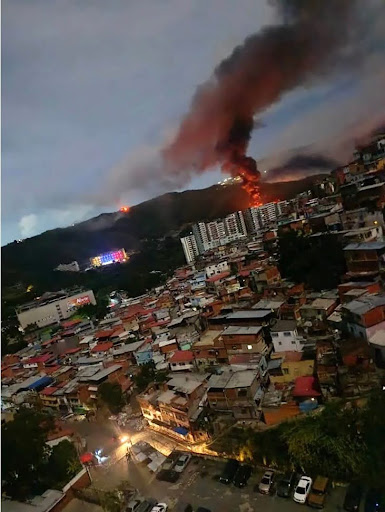
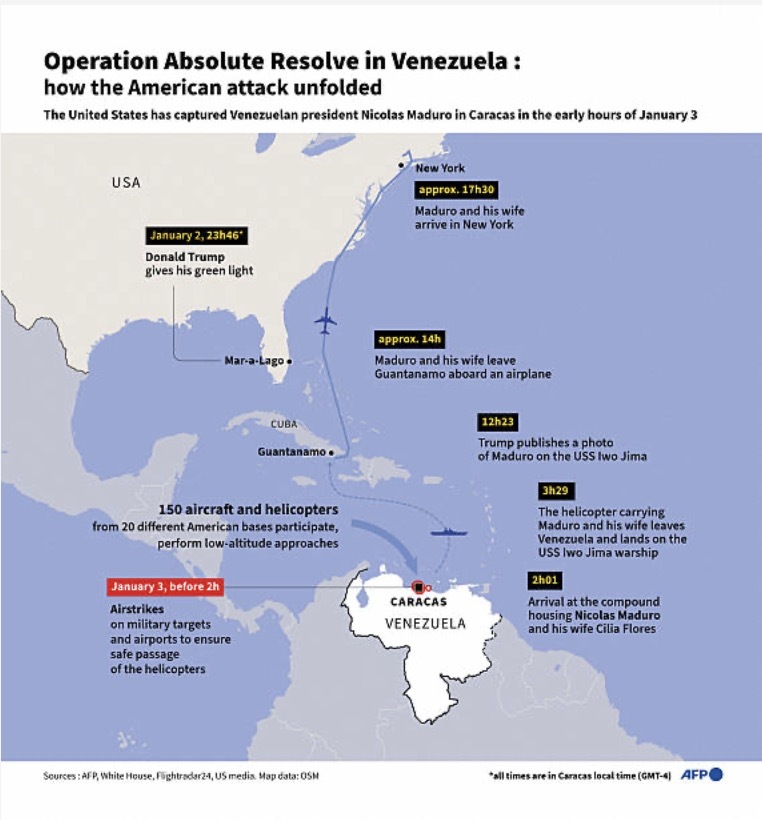
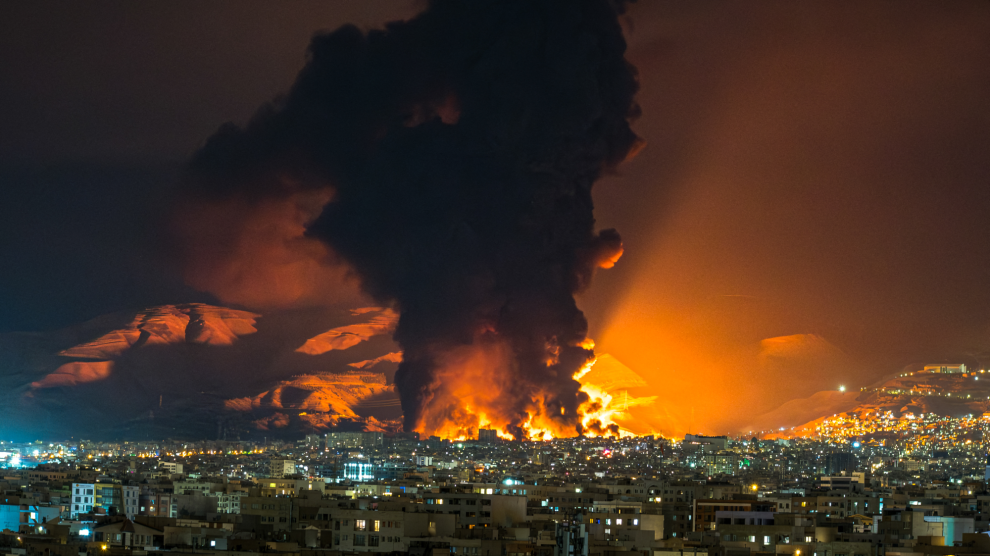
Over 100 people were killed on January 3rd during the U.S. military procedure to capture Nicolás Maduro and his wife, Cilia Flores. Operation Absolute Resolve commenced at around two in the morning when explosions were reported. U.S. forces destroyed northern Venezuela’s infrastructure as Maduro was taken in Caracas, the country’s capital. Maduro and Flores were brought to New York, where they will face trials based on charges related to narcoterrorism.
“Venezuela was the victim of a barbaric and treacherous attack,” Diosdado Cabello (Minister of Interior, Justice, and Peace in Venezuela) said. “So far, there are 100 fatalities and a comparable number of injuries.”
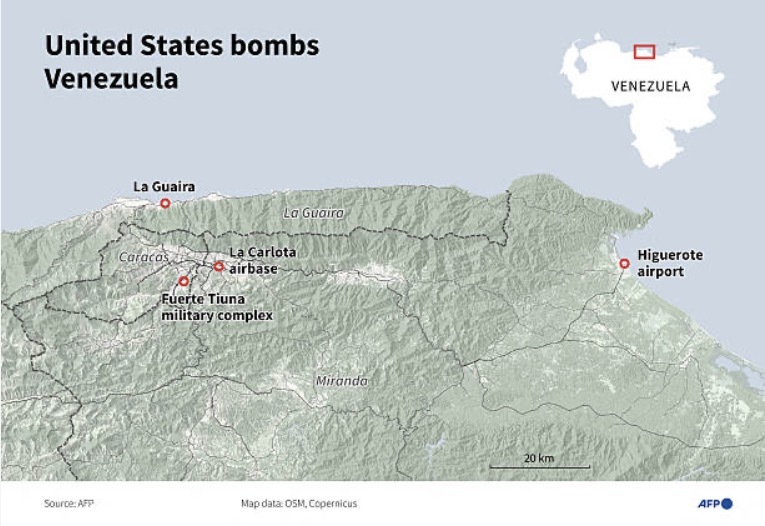
In the aftermath of the bombings, 23 Venezuelan soldiers were reportedly killed, and the Cuban government stated that 32 of their military personnel died. This has raised conflicting views internationally. U.S. Officials justified the act by referencing the Monroe Doctrine. Under the Roosevelt Corollary, the United States has the power to intervene as a police power in Latin America. However, United Nations experts claimed that the raid violated the principles of sovereignty enshrined in the UN Charter. Many countries emphasized the breach of Venezuela’s independence, questioning the legality of the force used.
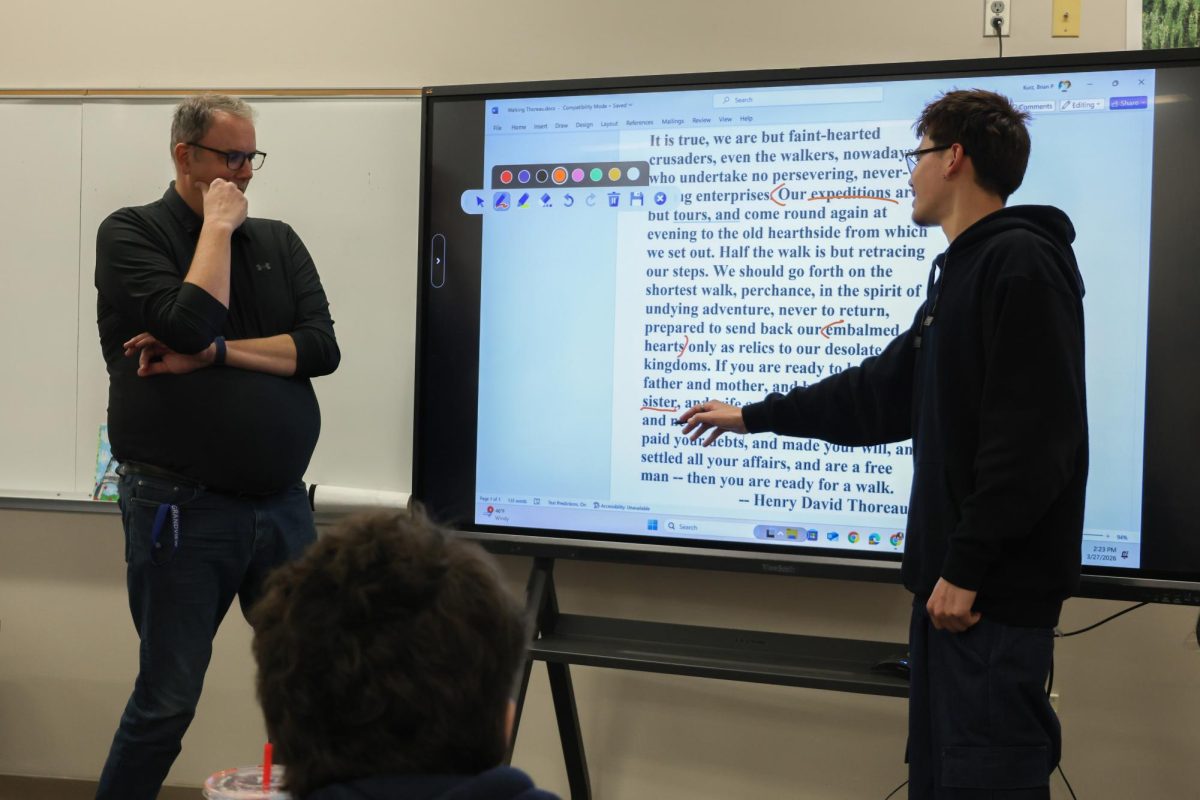
“The Monroe Doctrine and the Roosevelt Corollary say that the United States will be the police force in Latin America, and the rest of the world doesn’t get to interact with Latin America unless we allow it,” Brian Gausman (Social Studies) said. “If there was somebody to take Maduro out of power, it was going to be the United States.”
President Donald Trump integrated a modern extension of the Monroe Doctrine—namely, the “Trump Corollary.” It was implemented in the Trump administration’s 2025 National Security Strategy, which illustrated U.S. dominance in the Western Hemisphere. The Corollary prevents other powers from securing resources and gaining control, whilst also allowing increased military action against cartels and controlling migration. This would expand the United States’ military footprint and its access to Venezuela’s resources. The reasseration has sparked debate, with supporters viewing it as necessary to prevent foreign influence and critics seeing it as a risk to long-term conflict.
“His [Trump’s] explicit invoking and extension of the Monroe Doctrine, or what his staff calls the ‘Trump Corollary’ and what Trump himself labels the ‘Donroe Doctrine,’ is a case in point,” Paul Poast (Associate Professor at UChicago). “Make no mistake, the U.S. has long maintained dominance in the region and has regularly militarily intervened in Latin America over the two centuries since Monroe. But Trump is asserting a fixation on the hemisphere and a willingness to threaten and apply force at a scale that has not been seen in decades, even in a century.”
Divided views have rippled throughout Venezuela itself. A multitude of civilians expressed their hope for a better way of life after years of suffering under Maduro’s authoritarian rule. However, others felt fear and uncertainty following the bombing, with significant concern about the possibility of further military strikes. Those who experienced the operation first-hand described it as terrifying and unruly. One Venezuelan soldier said he felt as though his head was “exploding from the inside,” recalling the event as unlike anything he’d ever seen.
“What’s been interesting to me is hearing a lot of the conflicting views of Venezuelans,” John Rios (Social Studies) said. “Some are very happy that Maduro’s gone. Others are saying, ‘Okay, great. We’re glad he’s gone. But now what’s going to happen?’ They don’t want to be a puppet of the United States. Some people said, ‘We don’t like what President Trump and the United States did, but don’t take that to mean we thought Maduro was a great guy.’ I think that, universally, people look at Maduro as being a dictator controlling Venezuela.”
Speculations about Trump’s intentions with Venezuela arose after Operation Absolute Resolve. Whereas the main reason for entering the country was initially stated as an anti-drug operation, the president later explicitly asserted that the U.S. would “run” Venezuela and “take out a tremendous amount of wealth” from its oil reserves. U.S. forces have seized at least six Venezuelan oil tankers, including the Marinera, the M/T Sophia, and the Veronica. Trump defends the action by using the International Emergency Economic Powers Act (IEEPA) as the tanks were considered a threat to U.S. national security. The administration has gathered warrants under U.S. code that target assets related to terrorism. Furthermore, the United States is adopting a regime management approach, which prioritizes stability over immediate democratization. Venezuelan Vice President Delcy Rodríguez was sworn in as interim president, with the U.S. using military leverage to ensure compliance with its demands. In an interview with The New York Times, Tim Kaine, the Senator of Virginia, expressed his concern over the power that the United States holds in Venezuela.
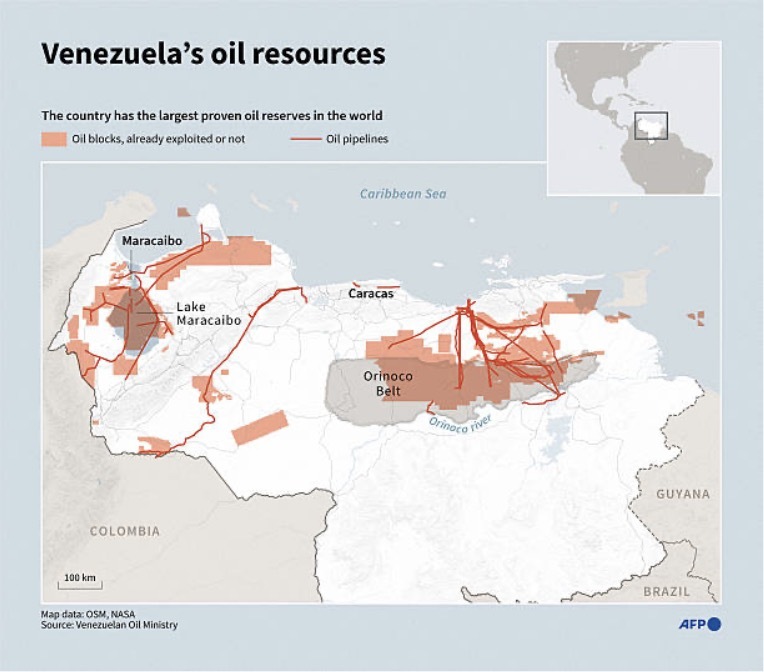
“There are U.S. military seizing Venezuelan oil every day,” Kaine said. “There’s the U.S. military striking Venezuelans on boats in the water every day. We’re not occupying their country without the military. We just went in and deposed their government. We are controlling who governs the country. We are controlling when Venezuelans are entitled to have elections again. We’re controlling their chief economic asset. That’s all being done by the U.S. military.”
Following the capture of Maduro, he and his wife were transported to New York to undergo prosecution. The pair had been indicted on several charges—including narcoterrorism, cocaine transportation, and weapons offences. Both Maduro and Flores pleaded not guilty. They are currently being held in pretrial detention, with the next hearing scheduled for March 17. Barry Pollack, Maduro’s defence attorney, argued that the arrest was a military abduction—similar to the claim made by Rodríguez, who castigated the apprehension as an illegal kidnapping.
“The closest historical parallel to the removal of Maduro was U.S. intervention in Panama in 1989 and the ultimate capture of its military leader, Manuel Noriega,” Michael Albertus (Professor at UChicago) said. “Noriega and several top figures were forcibly removed, extradited to American courts on drug-trafficking and money laundering charges, and convicted. But there are also differences. Noriega’s removal required American Marines on the ground in Panama and took weeks. And the American government then aided the installation of a democratic government. In Venezuela, the U.S. so far has snubbed the democratic opposition.”


![The Stone Age Starts with the Schools [OPINION]](https://ghschronicle.com/wp-content/uploads/2026/04/iranphoto-1-900x1200.jpg)

May Grace • Jan 27, 2026 at 8:40 am
No one was actually killed that day, and it also tells you where they hit if you care to actually look. Also are we going to Ignore that the women that was put in office gave trump her peace award? what a disappointment.