


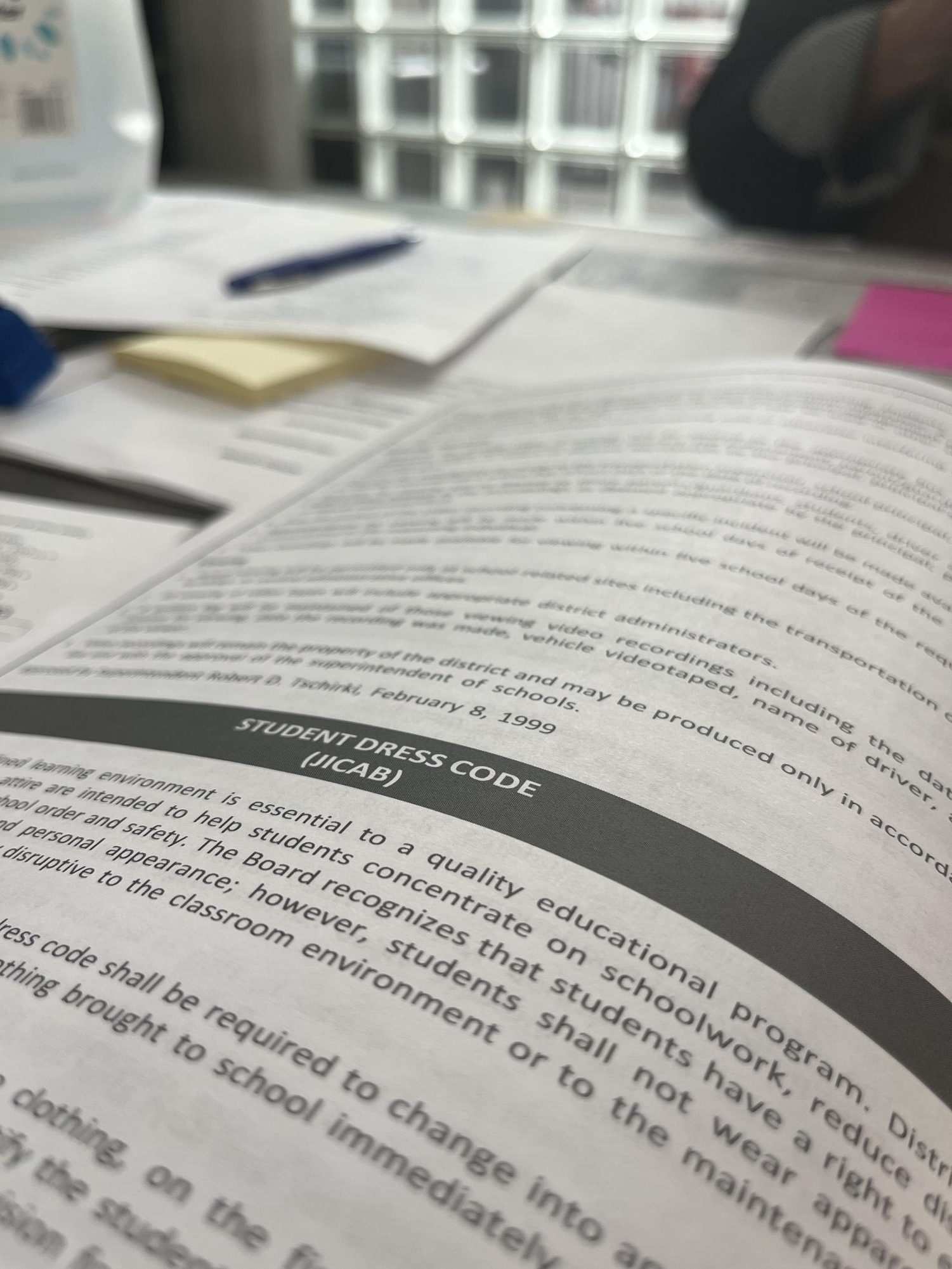
In early October, I was brought into the dean’s office for something I wore. The shirt I wore that day said the phrase “From the River to the Sea”. This prominent saying describes the area of land in which I, a Palestinian student at Grandview, believe is the land where my roots originate from the Jordan River to the Mediterranean sea. A cultural saying that was deemed offensive to other students. I was left to wonder why something that represents my culture is offensive. I explained this to the dean that had taken me out of class that day, and the dean understood. However, I was told if I am reported in again as I was that day, I will be asked to flip my shirt. It seems as if for some reason when I represent my culture, it is as if I’m taking a political stance.
It would be ignorant to say that Palestinian culture carries no historical or political burden. For nearly six decades, many Palestinians have lived under Israeli occupation, as noted by the United Nations. A systematic oppression over the land of Historic Palestine. Due to the land disputes, an ever-lasting conflict has been strong between the two groups. The conflict is to a point where even the cultures of both peoples are typically associated with it. What this means for students at Grandview, is what I, and other Palestinian students, discovered through our clothing.
School dress code is usually thought of as a punishment for people dressed inappropriately, in gang wardrobes (depending on area), or representing hate through their clothing. Yet, there is an abundance of potential for someone to be dress coded.
“The dress code is designed to make sure it’s a safe and disciplined learning environment that keeps everybody safe,” Julie Machakos, Dean (Non-Affiliated with my Dean visit), said. “Anything [On your clothing] that might be deemed disruptive to the classroom, or [Affects] keeping an orderly and safe school, is when you have to change your clothing.”

I wondered what part of the criteria did my shirt fall into. In my head, I’m simply wearing a cultural tee-shirt. Why is anyone offended by what I wear, if it is personal to me?
“In your case, it wasn’t that the wording was offensive,” Machakos said. “It was that the belief behind it, the sentiment behind it could be deemed because there’s a conflict with the Palestinians and the Israelis.”
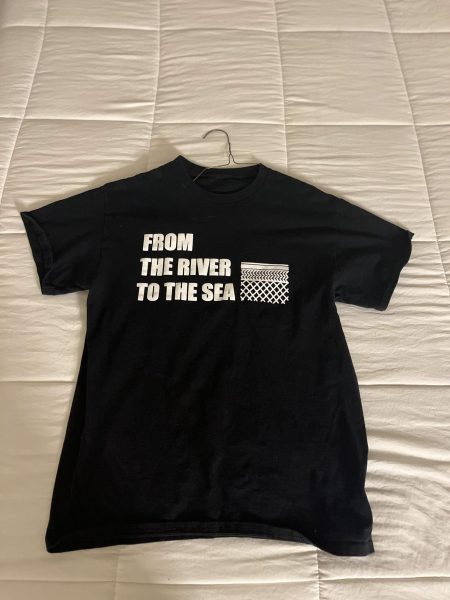
“From the River to the Sea”, has been a controversial saying in recent times. What started out as a saying of liberation, of the Palestinian people and their land, has been perceived as racial hatred.
“If somebody was going to wear a MAGA [Make America Great Again] hat, that might be offensive to someone who is not a MAGA supporter or in the same way.” Machakos said.
The difference between the shirt I wore, and something in the caliber of a Make America Great Again hat, lies with the difference between nationalism and activism. A MAGA hat symbolizes a political stance. When I wore my shirt, I was representing myself and where I come from. I was not trying to take a stance against anybody, or instigate an issue. From my view, I was showing what I love, rather than showing hate to anybody. I explained this to Mrs. Machakos, and she had an intriguing response.
“Because we have both Palestinian and Israeli students, this might be something more we need to be [more] cautious [about],” Machakos said. “It all stems from keeping order and safety in the school…We want the schooling to be focused on your learning and not on conflicts that are happening outside.”
From the new understanding I reached with my conversation with Mrs. Machakos, I realized I am simultaneously taking a stance when just simply wearing my shirt. Even if that is not the intention, I know what my shirt can be perceived as. I was upset, I love my culture and showing it, so the fact that this alone causes problems with those different then me made me feel a certain way.
However, another situation close to mine at Grandview, may call into question the authenticity of the standards Grandview claims they hold.
“I’ve been called into the dean’s office for wearing a Palestinian shirt,” Omar Zuraqi (11) said. “The dean didn’t have much of a problem, but some teachers saw it as me trying to cause political problems in arguments in school.”
If Zuraqi wore a shirt similar to mine, in which a political undertone may be visible, the dean visit may be understandable. Yet, this was not the case.
“It said ‘Min Falastine’, which means From Palestine, and it had a mosque that’s located in Palestine,” Zuraqi said. “They [staff] see this as a problem.”
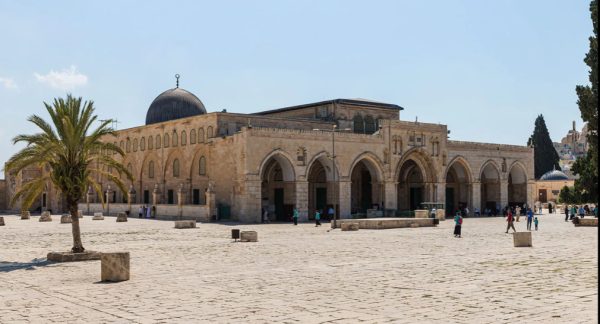
In this scenario, it is hard to argue that any political stances were taken here. Zuraqi, who is half Palestinian, was simply displaying nationalism. Instances like this can cause students at Grandview to feel limited in representing themselves.
“I would say that we sympathize with that [Students feeling limited], but it is such a sensitive topic, and we do have students from both backgrounds, Palestinian and Israelis,” Machakos said. “Our job is to keep things safe and not have any violence during the day, so students can focus on academics.”
Although I do see where Mrs. Machakos and certain staff come from, I do feel a sense of limitation in representing myself. I doubt other students with different ethnicities fear getting dress coded for representing their culture. Even with the asterisks on Palestinian culture, I call on Grandview to uphold an equal standard for all students representing themselves. The line between political stances and nationalism is fine, but our administration and staff members must recognize it.


![The Stone Age Starts with the Schools [OPINION]](https://ghschronicle.com/wp-content/uploads/2026/04/iranphoto-1-900x1200.jpg)


![ICE: The Imperative For Immigration Reform [OPINION]](https://ghschronicle.com/wp-content/uploads/2026/02/Copy-of-ICEPOSTER-900x1200.png)
![Is the New Avatar More Fire, or More Ash? (Spoiler Free) [OPINION]](https://ghschronicle.com/wp-content/uploads/2026/02/Screenshot-2026-02-04-120057.jpg)
![The Hidden Consequences of “Happy Holidays” [OPINIONS]](https://ghschronicle.com/wp-content/uploads/2025/12/KoltonZuckerOverconsumptionPosterColor-900x1200.png)
Mark B. • Jan 30, 2026 at 10:55 am
First, there has never been a country or nation called Palestine. Second, “From the River to the Sea” in reality means wiping the Jewish people from the land that they have inhabited for centuries. In other words, wiping out the Jews.
I wish schools in America had a dress code that dictated what could be worn to school, not trying to manage what cannot. My daughter’s school had uniforms, it worked great. It allowed students to focus on schoolwork, not compete in a fashion show.