


It’s Wednesday, and your pencil is engraving notes into your fresh piece of paper. You’re listening to what your teacher is lecturing about, while you still feel the effects of the 5-hour night of sleep you had last night. All of a sudden, your teacher rapidly concludes the class and you hear the bell sound. For a brief moment, you are confused because there are supposed to be about 12 minutes left of class. Then, you remember it is an advisory day and begin to pack your bags, happy that class ended earlier than expected. Or, you could be dreading going into advisory class.
“I feel like it’s kind of a waste of time to be honest,” Conner Deickman (11) said. “We are practically doing nothing.”
In advisory, the class structure and teacher could differentiate between each class. During the class, a lecture could occur, class activities/games could take place, an assembly may be scheduled, or complete work time is offered.
“It can be nice, the activities we do make it more entertaining,” Giovanni Morales (10) said. “When we aren’t playing games, I like to study.”
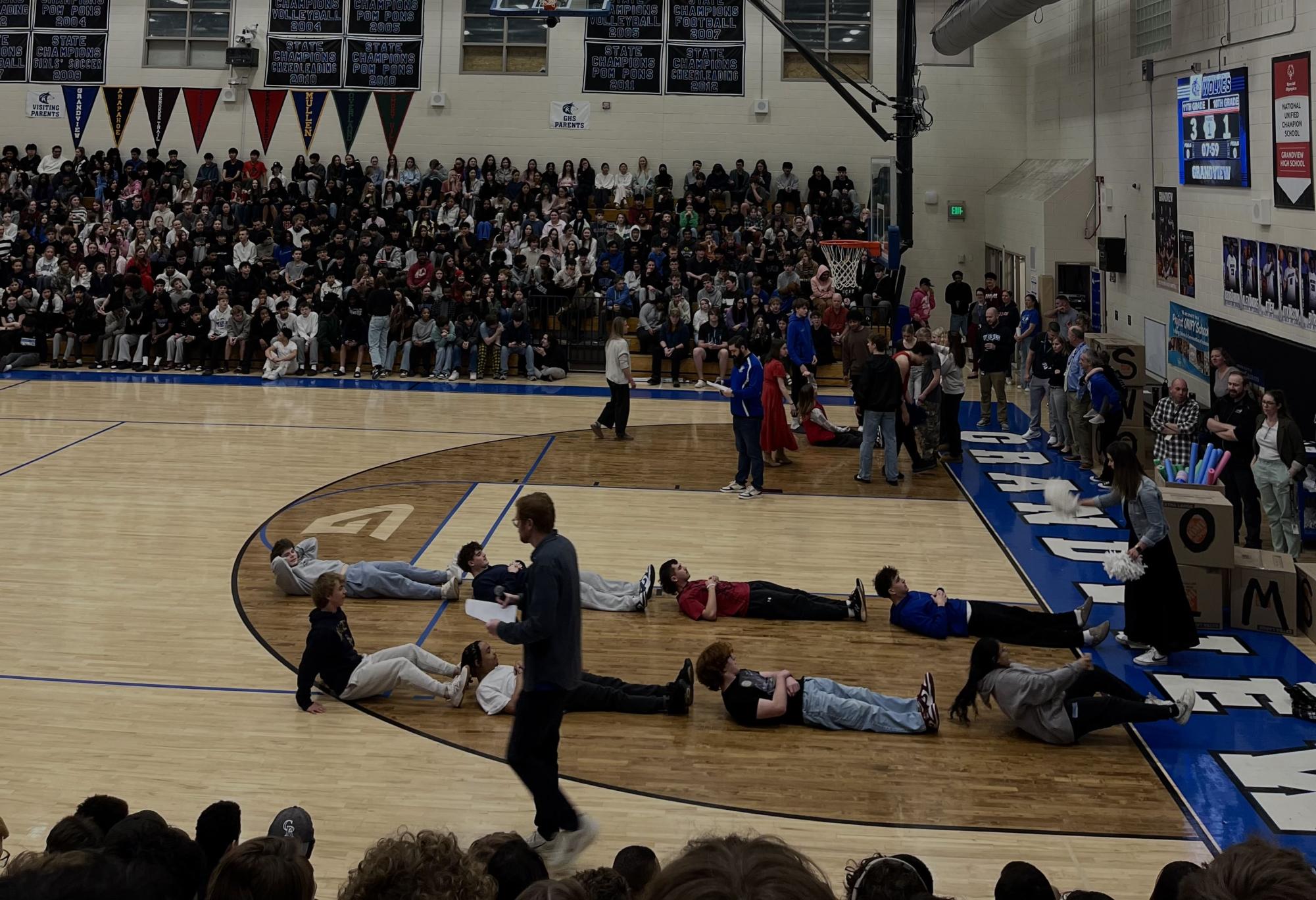
Recently, advisory has taken a whole new step in the fun activities it entails. Entire grades compete against each other in a series of competitions that take place in the Main Gym. This highlights the initiative of the school trying to make advisory more than just an ordinary class.
“It’s obviously not an academic class; it’s not meant to be an academic class. The point of advisory was truly built by the district to create a space for students to not have an academic class in the middle of their day,” Mrs. Bergeron, the Activities and Advisory director, said. “[And] I do think there are times where we can have fun there and play games.”
While not technically an academic class, advisory is still used to give lectures often. The lectures can vary in topic, but each shares the goal of helping students.
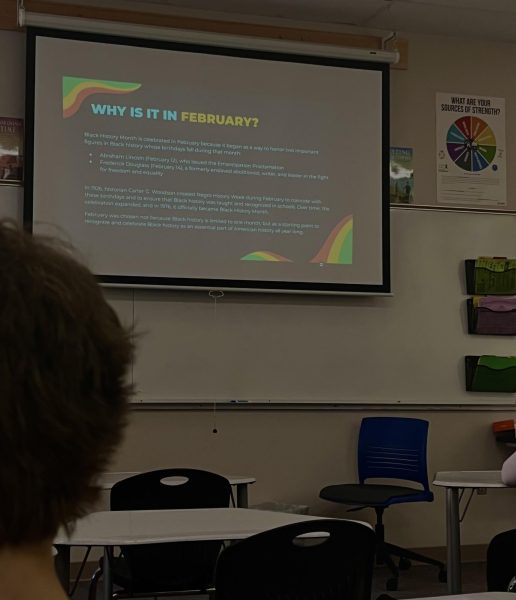
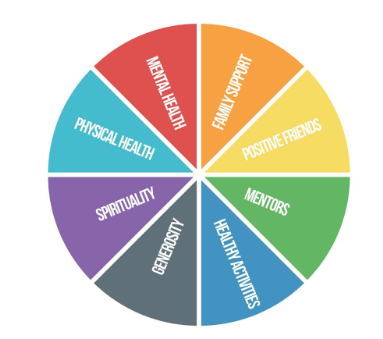
“We’ve done sources of strength lessons over the years to educate [students] on mental health,” Bergeron said. “There are also life skills embedded in it[advisory], like buying a car, renting an apartment, etc.”
Mental health is a familiar subject discussed in advisory. Multiple methods of prioritizing students’ mental health can be cited from advisory. Besides basic lessons, students have taken SEL screeners to communicate their mental state.
“The lessons that Mental Health works [for advisory class] are typically involve Sources of Strength (which is a district-wide suicide prevention program), suicide prevention lessons, and the SEL screener,” Mrs. Newcomb, Grandview’s School Psychologist, said.
Whether or not advisory effectively improves students’ mental health as much as it recognizes it is undetermined. Per SEL screener responses, about 17% of Grandview’s students appoint their advisory teacher as a trusted adult to talk to – a number lower than what is expected for the purpose of the class.
“The point of advisory is to make a community within a community,” Bergeron said. “The district took initiative to create advisory so that students feel connected to at least one adult.”
In this sense, advisory could be seen as lacking towards its ultimate goal. With the SEL data and student opinion, the necessity of the non-academic course weakens.
“There is no use to advisory,” Liliana Matusyn (11) said. “I rarely communicate with my advisor teacher.”
Another statistical blow towards the class comes from a Google Form survey that consisted of anonymous students at Grandview. According to the survey, 77.8% of students do not have their mental health affected by advisory in any way.
“In terms of mental health, I don’t really think advisory does anything.” Pernad Waiz (12) said.
However, this does not mean advisory is necessarily failing in what it is trying to accomplish for students’ mental health.
“The Advisory committee works really hard to make lessons that are thoughtful and have the information necessary for all students.” Newcombs said.
The effort by the school is evident when it comes to advisory, but how students embrace it is out of the school’s control.
“I think if you buy into that stuff [Mental health presentations and Surveys], it could be helpful, but most people do not,” Deickman said.
Teachers could also play a role in the lack of mental effectiveness the advisory committee is trying to achieve.
“I hope it has some positive effects, but as I understand from students I work with, not all teachers teach the lessons that are made for advisory, as they don’t always feel comfortable speaking/teaching about mental health issues [because it’s not their purview].” Newcombs said.
On a more positive note, the same survey dictates that 90% of students still enjoy advisory and want it to remain an active class at Grandview.
“I’d rather go to advisory than straight to class, I think they should keep it” Morales said.
Advisory offers more than the events it sometimes has planned. Students could use advisory as a study hall or even social time with classmates.
“You can treat it [Advisory] like a study hall,” Waiz said. “I typically talk to my friends and study hard.”
The schoolwide survey states that 55% of students use advisory as an opportunity to do work and about 67% use it to socialize. The different uses of advisory paired with lectures and scheduled events, it could be hard to understand the main reason it was created by Cherry Creek Schools.
“The point of advisory, as I understand it, is to build community and relationships,” Newcombs said. “This class was created to give students another adult in the building who they can build trusting relationships with as well as students they see consistently.”
Yet, when students were asked to describe advisory in a few words their answers rivaled this idea.
Advisory was described as “Useless”, “Waste of time”, “Boring”, and “Unproductive”. This shared perspective of a mandatory class can raise concerns about structure at Grandview.
“I can see that perspective but sometimes we have to do things that don’t feel necessary. If it’s in the schedule, then we have to do it,” Newcombs said. “Every high school and middle school in the district does it, and I know other schools do different things but I don’t think school is a waste of time, so I don’t think Advisory is a waste of time either.”
While advisory is looking to stay permanent for the time being, change could come from how students approach it as a whole.
“It’s what students make of it,” Bergeron said. “A part of it is for students to make the most out of it to gain something from the experience.”


![The Stone Age Starts with the Schools [OPINION]](https://ghschronicle.com/wp-content/uploads/2026/04/iranphoto-1-900x1200.jpg)


![ICE: The Imperative For Immigration Reform [OPINION]](https://ghschronicle.com/wp-content/uploads/2026/02/Copy-of-ICEPOSTER-900x1200.png)
![Is the New Avatar More Fire, or More Ash? (Spoiler Free) [OPINION]](https://ghschronicle.com/wp-content/uploads/2026/02/Screenshot-2026-02-04-120057.jpg)
![The Hidden Consequences of “Happy Holidays” [OPINIONS]](https://ghschronicle.com/wp-content/uploads/2025/12/KoltonZuckerOverconsumptionPosterColor-900x1200.png)

Rylan Pompey • May 15, 2026 at 9:34 am
If it’s a B Day and it takes from my off-period, I find Advisory useless..
But if it’s an A Day… and I have CP Chemistry next? I LOV3 ADV157150RTISORY.
John Smith • Mar 13, 2026 at 4:47 pm
Absolutely waist of time and resources. Terrible that kids have to be subjected to this. Seem it’s a way to just fill up a day to draw funds from budget. At the same time, when trying to re-arrange the schedule to allow for afterschool activities, which kids do enjoy and which actually do benefit them, it was a hard rejection. No, instead let fill up a day with useless babysitting time as long as school budget gets funded. Sad